
How to Search Greer County Court Records
Greer County sends most court-record searches to On Demand Court Records, known as ODCR. The county Court Clerk links to it straight from the official county site. ODCR lists Greer in its court dropdown, so the case index pulls directly from the District Court. Public docket searching on the site is free. You can search by a partial name, a full name, a case number, or a filed-date range. The free docket view returns the case number, parties, court, filing date, case type, and the list of events. Document images and payment links may appear deeper in some files.
Gather a few details first. A full name in Last, First form works best. A case number works even faster when you have one.
- Open the ODCR site or use the Court Clerk's "Search Court Records" link.
- Leave the court group on All Courts, or pick Oklahoma District Courts.
- Choose Greer from the long court dropdown.
- Type a party name in Last, First format, or enter a case number.
- Set the party type. Plaintiffs and Defendants is narrow; All Parties runs wide.
- Use the case-type menu to focus on felony, misdemeanor, probate, traffic, or another category.
- Open a result to read the docket, then follow any document or payment link.
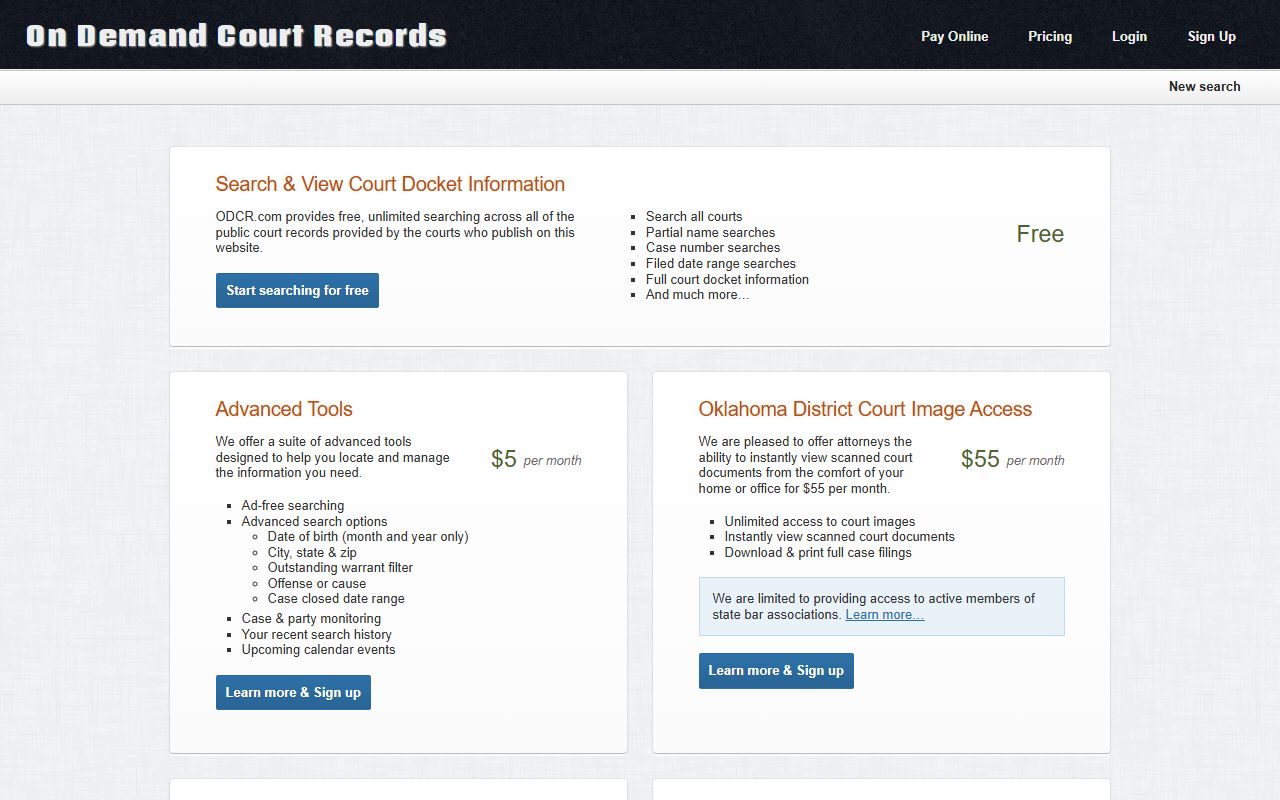
ODCR explains its cost structure on a dedicated pricing page. The page confirms that public docket searches cost nothing, while paid plans add extended document access.
Greer County Court Records Search Fields
Each ODCR search uses a small set of fields. None are strictly required, but the court field is the one that localizes results to Greer. The party-type control changes how wide the net runs. The case-type menu trims a long result list down to a single division.
| Field Label | Type | Required | Notes / Format |
|---|---|---|---|
| Court group | Dropdown | Optional | All Courts; Oklahoma District Courts; Tribal Courts. |
| Court | Dropdown | Needed to localize | All Oklahoma counties plus tribal courts; choose Greer. |
| Party name | Text | Optional | Last, First format. |
| Party type | Dropdown | Optional | Plaintiffs and Defendants; All Parties. |
| Type of case | Dropdown | Optional | Felony, misdemeanor, traffic, probate, guardianship, small claims, and more. |
| Search | Button | Yes | Runs the docket search. |
Types of Greer County Court Records
The Greer County District Court keeps several kinds of case files. The Court Clerk records, files, and stores them for each division. Civil, criminal, family, probate, juvenile, and small-claims matters all run through the same office. ODCR sorts these into dozens of case-type labels.
Not every record sits in the District Court. City of Mangum tickets go to the Mangum Municipal Court instead. Deeds and mortgages belong to the County Clerk, not the court. State traffic citations from the Highway Patrol or the Sheriff route back to the District Court.
- Civil cases: money disputes, judgments, liens, and habeas writs, split by dollar amount.
- Criminal case files: felony, misdemeanor, and probable-cause matters with charges, pleas, and sentences.
- Family and domestic: divorce, paternity, child support, and marriage license records.
- Probate: estates, guardianships, conservatorships, trusts, and filed wills.
- Traffic: state citations filed in the District Court, separate from city tickets.
- Protective orders and search warrants, where the file is open to the public.
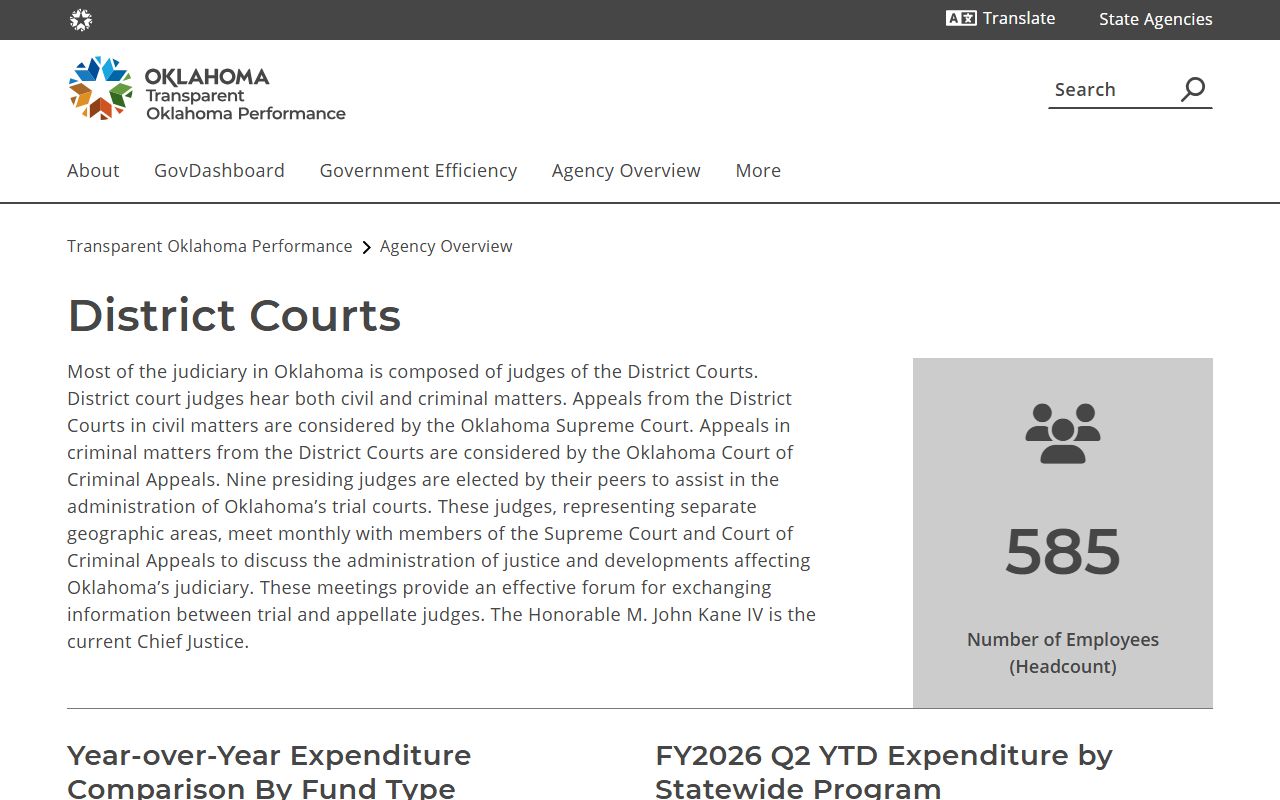
Oklahoma's District Courts handle both civil and criminal matters statewide, as the Oklahoma District Courts page explains. Civil appeals move to the state Supreme Court, while criminal appeals go to the Court of Criminal Appeals.
What Greer County Court Records Show
A public docket entry shows the bones of a case. The fields stay fairly steady across case types. Criminal files add charge and sentence detail, while civil files add motions and judgments. Some personal identifiers stay masked under court rules.
| Field | What It Shows |
|---|---|
| Case Number | Court identifier with a prefix such as CF, CM, TR, PB, FD, or SC. |
| Court | Names the court, here the Greer County District Court. |
| Parties | Plaintiff, defendant, petitioner, respondent, and related names. |
| Case Type | The ODCR category the case was filed under. |
| Filing Date | When the case opened, plus dated docket events and hearings. |
| Disposition | The current or final outcome of a charge or case. |
| Financials | Bonds, fines, court costs, and payment status. |
| Documents | Some files link images; the docket may not equal full access. |
Note: A public docket lists case events, but it does not always include every filed document or a complete image of the court file.
Online Payment and OSCN Options
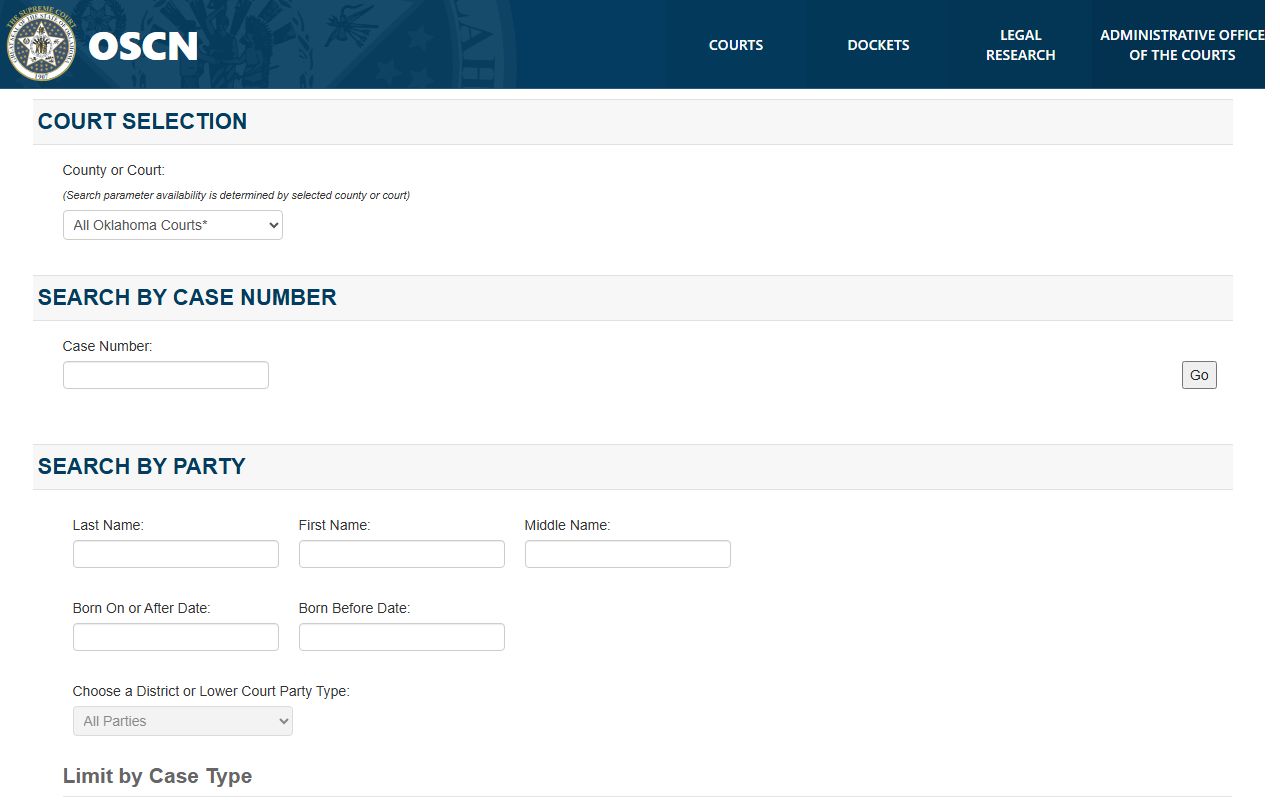
OSCN, the Oklahoma State Courts Network, is the other statewide court-record channel. It carries docket and citation searches for both OSCN and non-OSCN counties. Automated-access checks sometimes block the OSCN search, so a person may need to clear a verification step. When you hold a case, citation, or payment-plan number, the OSCN e-payments tool runs a direct lookup.
The OSCN citation and docket search opens from a single statewide landing page. From there a citation or case number returns the matching Greer County District Court docket.
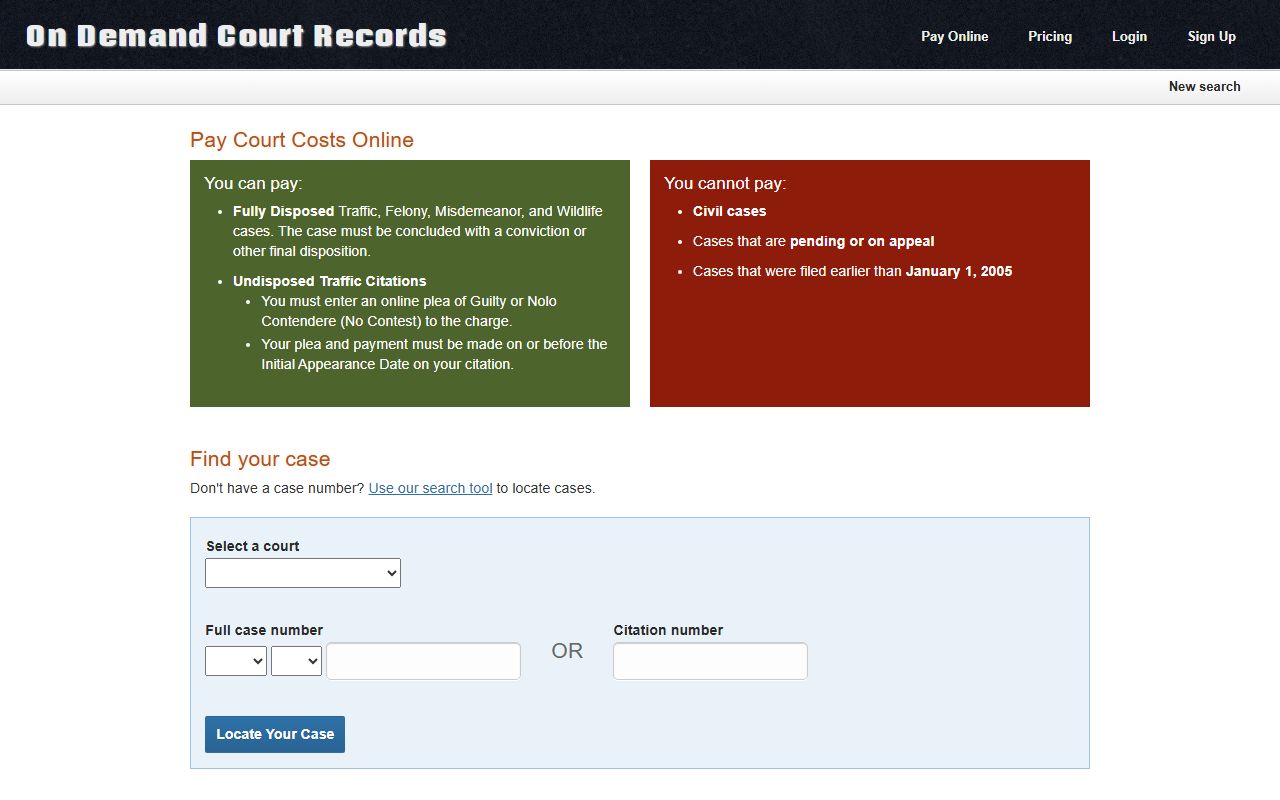
ODCR also processes some online court-cost payments. The pay tool covers fully disposed traffic, felony, misdemeanor, and wildlife cases that ended in a conviction or other final outcome. It accepts undisposed traffic citations when the user enters a guilty or no-contest plea by the first appearance date. Civil cases, pending appeals, and cases filed before January 1, 2005 cannot be paid there.
ODCR spells out which cases qualify for online payment on its pay screen. Municipal and sheriff citations may use a different format, so the system warns users to confirm the issuing court first.
| Field Label | Type | Required | Notes / Format |
|---|---|---|---|
| County | Dropdown | Yes | Select a county; Greer is listed. |
| Case, Citation, or Payment Plan Number | Text | Yes | Examples: CM-2017-100; PP-OK-2019-25; citation M972124. |
| Search | Button | Yes | Runs the payment or case lookup. |
Public Access Laws for Greer County Court Records
Oklahoma treats court records as public by default. The Oklahoma Open Records Act, found at 51 O.S. §§ 24A.1 and following, requires public bodies to give access unless a statute makes a record confidential. Section 24A.5 spells out the duty to allow inspection and copying, subject to lawful fees. Greer County court files fall under this framework. You do not need to state a reason to view a public case.
Online filing adds its own rules. The Oklahoma Unified Case Management System handles e-filing for the courts. Its terms remind filers to limit sensitive personal identifiers, such as Social Security and account numbers, in anything they submit. District Court Rule 31 guidance backs that up. Redaction protects people whose data would otherwise sit in an open file.
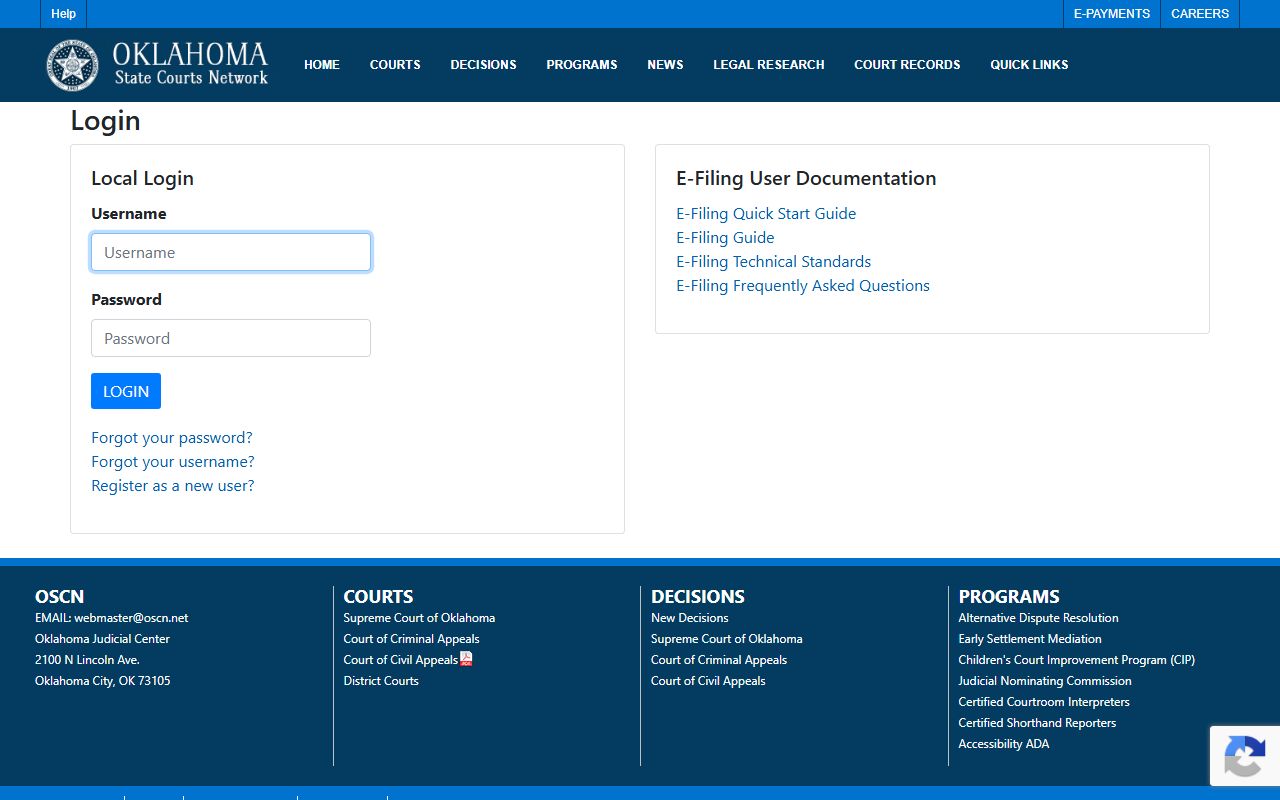
The state e-filing portal posts its public-access and personal-identifier terms before login. Those terms shape what shows in the public docket and what stays redacted.
Note: Oklahoma law lets you inspect public court records without explaining why you want them, though copy fees and statutory exceptions still apply.
Sealed or Confidential Greer County Records
Some records never reach the public docket. Oklahoma shields several categories by statute. Juvenile court files are generally confidential under Title 10A. Adoption and mental-health matters carry tight limits. Sealed or expunged cases may drop off ODCR and OSCN entirely once a judge signs the order.
- Juvenile records: confidential under Title 10A and not searched like adult cases.
- Sealed or expunged cases: removed from public view after a court order.
- Adoption records: closed unless a statute or court order grants access.
- Mental-health proceedings: listed as a case type, but sensitive details stay private.
- Personal identifiers: Social Security numbers, account numbers, and minor names are redacted.
Clearing a record takes a court process. A person identifies the case in ODCR or through the Court Clerk first. Eligibility ties to Title 22, Section 18, and the OSBI cannot pre-approve it. If eligible, the person files a petition in the Greer County District Court where the case sits. Notice may go to the district attorney, the OSBI, and the arresting agency. A granted order seals or restricts public access rather than erasing every trace. The full case file, with charges and sentencing, lives in the Greer County criminal court records.
Requesting Records From the Court Clerk
Not every record sits online. Older files, certified copies, and sealed-case questions go through the Court Clerk directly. The office records and keeps the permanent District Court files. You can call, mail, or visit the counter in Mangum during business hours. Certified copies carry the clerk's authentication for legal use.
Greer County Court Clerk
P.O. Box 216
Mangum, OK 73554
580-782-3665
Hours: 8:00 a.m. to 4:00 p.m.
Phone and counter requests matter more here than in big metro counties. Greer is rural, and many tasks finish faster with a call. Staff can confirm whether a document is digitized, point you to the right division, or explain a certified-copy fee. Bring identification and the case number when you visit.
Note: Call the Court Clerk before driving to Mangum, since a quick check can confirm whether the file is online or must be pulled by hand.
Court Clerk and County Clerk Roles
Greer County splits records between two offices. The Court Clerk holds court files, while the County Clerk holds land and county records. Deeds, mortgages, plats, and liens are recorded with the County Clerk, not the court. Board minutes, county finances, and open-record copy fees also sit there. So a title search and a court-case search use different counters.
The distinction trips up many searchers. A divorce decree or a probate file is a court record, so it goes through the Court Clerk and ODCR. A property deed is not a court record, so it goes through the County Clerk. Knowing which office owns the record points you to the right portal the first time. Full court dockets and case histories stay on the court side.